7月30日2026 · 星期四

从 35 条抓取中筛选 12 条 · twitter × 7 账号 · 01:31 UTC 生成

今日信号 · 高度即评分 · 点击直达


  1. Claude Code 创始人 Boris Cherny 在 YC Startup School 2026 探讨 Opus 5 与 AI 产品构建9.0
  2. OpenAI:GPT-5.6 Sol 解决开放数学难题,ARC-AGI-3 分数因 API 设置翻三倍9.0
  3. OpenAI 发布栈优化,实现更高性能模型9.0
  4. GPT-5.6 Sol 自我优化推理效率,成本降低 20%9.0
  5. 阿里Qwen Audio 3.0 Realtime Plus以84.1%登顶语音到语音指数8.0
  6. Code Arena 推出全栈基准测试,Kimi K3 领先8.0
  7. 在 AGENTS/CLAUDE MD 中添加 git 提交规则以优化 AI 工作流8.0
  8. 开发者借助编程智能体从技术主管转型工程经理,生产力大增8.0
  9. OpenAI 为学术研究人员推出免费前沿模型访问计划8.0
  10. Agnes AI 发布 Agnes 2.5 Pro Alpha,API 免费且支持百万级上下文窗口8.0
  11. OpenAI 开源 Codex Security CLI,实现自动化漏洞扫描8.0
  12. OpenAI 重置 GPT-5.6 Sol 使用限制并提升效率8.0
019.0

Claude Code 创始人 Boris Cherny 在 YC Startup School 2026 探讨 Opus 5 与 AI 产品构建

Claude Code 的创建者 Boris Cherny 在 YC Startup School 2026 上讨论了新发布的 Opus 5 模型。他透露 Claude Code 删除了 80% 的系统提示词而未损失性能,并分享了解决提示注入问题以及 AI 开发中“产品积压”概念的见解。 Opus 5 以之前模型一半的成本实现了接近前沿的智能,使先进 AI 更易获取。系统提示词的大幅缩减标志着开发者与模型交互方式的转变,而关于提示注入的讨论则凸显了 AI 产品面临的关键安全挑战。 Opus 5 是 Anthropic 最先进的 Opus 模型,在编码和专业工作中表现出色,并已在 Amazon Bedrock 上可用。系统提示词的缩减之所以可行,是因为 Opus 5 需要更少的显式指令;然而,适用于 Opus 4.8 的提示习惯现在可能会降低性能。演讲还涉及运行数千个 AI 代理以及提示工程不断演变的本质。

@ycombinator@trq212 转推1 个视频Fresh off the launch of Opus 5, Claude Code creator Boris Cherny (@bcherny) joins YC's @sdianahu at Startup School 2026 to talk about what the newest models can do, how Claude Code came to be, and what it means to build products when the underlying capabilities keep accelerating. 00:07 — What Makes Opus 5 Different 02:06 — Solving Prompt Injection 03:21 — Why Claude Code Deleted 80% of Its System Prompt 06:37 — Press Delete on Your AI Product 07:20 — How to Rebuild Your System Prompt 10:30 — Product Overhang and “Unhobbling” AI 14:26 — Give Claude Harder Problems 19:32 — Prompt Engineering Is Changing 21:57 — The Two-Week Claude Code Prompt 24:42 — Running Thousands of AI Agents 30:15 — Coding Is (Almost) Solved 32:20 — What Every CS Student Should Still Learn @AnthropicAI @claudeai原推文媒体预览展开原推文收起原推文

@trq212 转推了

@ycombinator

Fresh off the launch of Opus 5, Claude Code creator Boris Cherny (@bcherny) joins YC's @sdianahu at Startup School 2026 to talk about what the newest models can do, how Claude Code came to be, and what it means to build products when the underlying capabilities keep accelerating. 00:07 — What Makes Opus 5 Different 02:06 — Solving Prompt Injection 03:21 — Why Claude Code Deleted 80% of Its System Prompt 06:37 — Press Delete on Your AI Product 07:20 — How to Rebuild Your System Prompt 10:30 — Product Overhang and “Unhobbling” AI 14:26 — Give Claude Harder Problems 19:32 — Prompt Engineering Is Changing 21:57 — The Two-Week Claude Code Prompt 24:42 — Running Thousands of AI Agents 30:15 — Coding Is (Almost) Solved 32:20 — What Every CS Student Should Still Learn @AnthropicAI @claudeai

背景
Claude Code 是 Anthropic 开发的 AI 编码助手。系统提示词是指导 AI 模型行为的初始指令。提示注入是一种安全漏洞,恶意指令被嵌入外部数据以操纵 AI 响应。Y Combinator 的 Startup School 是一个面向创始人的免费在线项目,而 Opus 5 是 Anthropic 的 Claude 系列中继 Opus 4.8 之后的最新模型。

7月29日 23:30在 X 打开#AI #Claude Code #Opus 5 #Startup School #Anthropic

029.0

OpenAI:GPT-5.6 Sol 解决开放数学难题,ARC-AGI-3 分数因 API 设置翻三倍

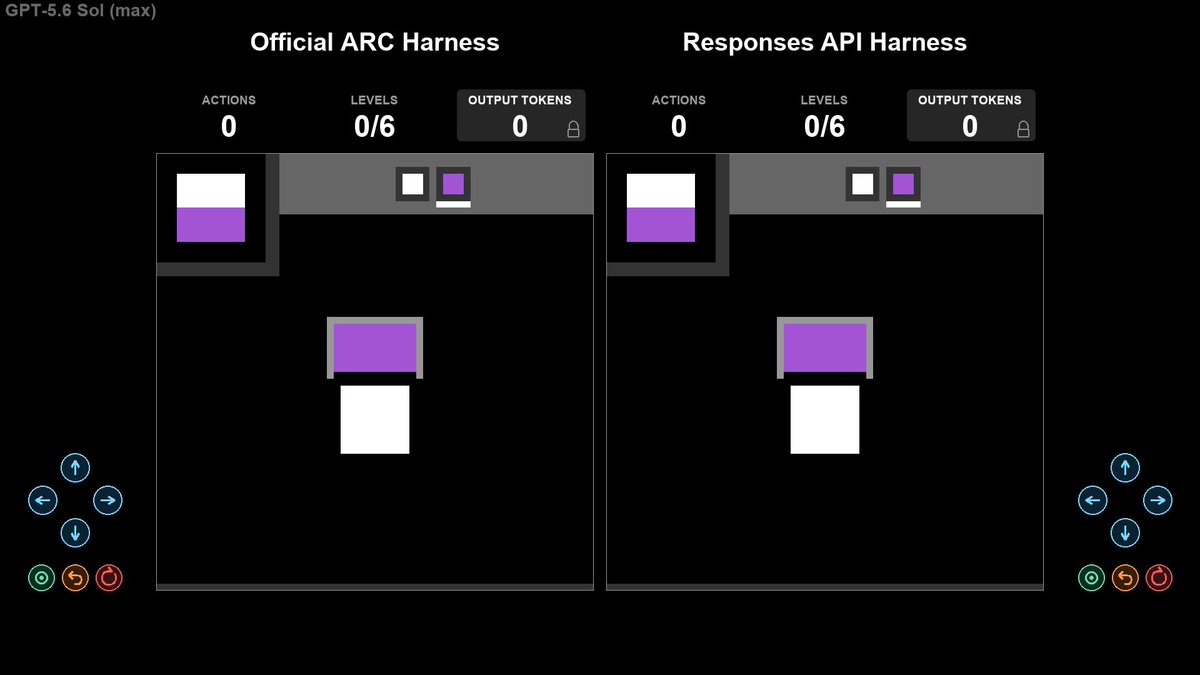
OpenAI 透露 GPT-5.6 Sol 已被用于解决数学领域的开放问题。然而,由于测试框架限制,它最初在 ARC-AGI-3 基准测试中表现不佳,无法保留已学信息。通过启用两项 API 设置——保留推理和使用压缩——分数提高了三倍,同时输出 token 用量减少了 6 倍。 这表明基准测试分数不仅反映模型能力,还取决于评估框架和 API 设置。这一发现对 AI 评估具有广泛影响,促使开发者优化配置以释放模型潜力。同时,它也凸显了 GPT-5.6 Sol 解决前沿数学问题的能力,标志着向更通用智能的迈进。 两项关键设置是跨多个上下文窗口保留推理,以及使用 OpenAI 的规范压缩实现。这些更改使模型能够基于先前学习,在 ARC-AGI-3 上达到最先进水平。OpenAI 建议使用 Responses API(而非旧版 Chat Completions)并启用这些设置以获得最佳性能。公众可在 arcprize.org/tasks 上测试游戏。

@OpenAI原推文1 个视频GPT-5.6 Sol has been used to solve open problems in mathematics. So why was it struggling with ARC-AGI-3, a benchmark of 2D puzzle games? We investigated. The harness was not letting it remember what it had learned. We found that enabling two API settings tripled our scores with 6x fewer output tokens. --- From twitter --- Terrific work by @ilanbigio and @sandersted on the investigation and post. Seems like it was a lot of fun. Take care of your harnesses out there, your model will thank you. > 引用 @thsottiaux: Turns out GPT-5.6 Sol is actually SoTA on ARC-AGI-3. > > Just took two setting changes. You just have to allow it to reason and work over multiple context windows with the help of our canonical compaction implementation. > > https://openai.com/index/how-two-settings-tripled-our-arc-agi-3-scores/ --- From twitter --- A benchmark score reflects the model as well as the harness and settings used to run it. For long-running agents, retaining reasoning and compacting context lets the model build on what it has already learned. https://openai.com/index/how-two-settings-tripled-our-arc-agi-3-scores/ --- From twitter --- We hope these experiments serve as a reminder that evals rarely measure models in isolation—they also measure a bundle of less visible choices about API settings, harness design, and prompting. If you’re an API developer trying to maximize performance, we recommend using the same settings that we deploy in our own products: - Use our Responses API, not our legacy Chat - Completions API - Retain reasoning - Use compaction If you want to test your own mettle against frontier models, try the public games yourself at http://arcprize.org/tasks原推文媒体预览展开原推文收起原推文

@OpenAI

GPT-5.6 Sol has been used to solve open problems in mathematics. So why was it struggling with ARC-AGI-3, a benchmark of 2D puzzle games? We investigated. The harness was not letting it remember what it had learned. We found that enabling two API settings tripled our scores with 6x fewer output tokens. --- From twitter --- Terrific work by @ilanbigio and @sandersted on the investigation and post. Seems like it was a lot of fun. Take care of your harnesses out there, your model will thank you. > 引用 @thsottiaux: Turns out GPT-5.6 Sol is actually SoTA on ARC-AGI-3. > > Just took two setting changes. You just have to allow it to reason and work over multiple context windows with the help of our canonical compaction implementation. > > https://openai.com/index/how-two-settings-tripled-our-arc-agi-3-scores/ --- From twitter --- A benchmark score reflects the model as well as the harness and settings used to run it. For long-running agents, retaining reasoning and compacting context lets the model build on what it has already learned. https://openai.com/index/how-two-settings-tripled-our-arc-agi-3-scores/ --- From twitter --- We hope these experiments serve as a reminder that evals rarely measure models in isolation—they also measure a bundle of less visible choices about API settings, harness design, and prompting. If you’re an API developer trying to maximize performance, we recommend using the same settings that we deploy in our own products: - Use our Responses API, not our legacy Chat - Completions API - Retain reasoning - Use compaction If you want to test your own mettle against frontier models, try the public games yourself at http://arcprize.org/tasks

背景
GPT-5.6 是一个模型系列,包含三个层级:Sol、Terra 和 Luna,其中 Sol 能力最强。ARC-AGI-3 是 2026 年 3 月推出的交互式推理基准测试,包含数百个手工制作的 2D 益智游戏,要求智能体在新环境中学习与适应。该基准评估智能体智能,包括探索、模型构建和规划。Harness 指运行模型测试的软件框架,compaction 是一种压缩对话历史以管理上下文长度的技术。
社区讨论
社区成员赞扬了 @ilanbigio 和 @sandersted 的调查,指出测试框架设计的重要性。一些人强调评估很少孤立地衡量模型,API 设置对性能影响显著。还有人提到这一过程既有趣又富有启发性。

7月29日 23:57在 X 打开#OpenAI #GPT-5.6 #AI #mathematics #ARC-AGI

039.0

OpenAI 发布栈优化,实现更高性能模型

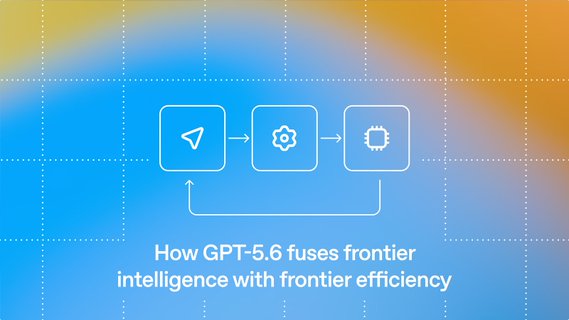
OpenAI 宣布对其整个技术栈进行了一系列优化,这些优化相互叠加,在成本-智能曲线的每个点上都能提供性能最佳的模型。该消息通过 X 平台发布,并链接到一篇关于 GPT-5 和 GPT-6 前沿智能效率的详细博客文章。这些改进不仅限于单一模型,而是覆盖了成本与能力权衡的全部范围。 这一公告标志着向效率和可扩展性的战略转变,可能使先进的人工智能更易获取且更具成本效益。通过全栈优化,OpenAI 能够以更低的成本提供更好的性能,这可能会加速各行业的采用并加剧 AI 实验室之间的竞争。对成本-智能曲线的关注表明,他们采用系统化方法来平衡能力与资源消耗,这是可持续 AI 部署的关键因素。 这些优化被描述为在整个技术栈中相互叠加,意味着在硬件利用率、模型架构和软件基础设施方面都有改进。博客文章特别提到了 GPT-5 和 GPT-6,表明这些效率提升适用于当前和未来的前沿模型。公告中没有提供具体的基准测试或定价变化,但对成本-智能曲线的强调表明,有一系列针对不同成本性能权衡进行优化的模型。

@OpenAI

These optimizations across our stack compound to unlock the most performant models at every point in the cost-intelligence curve. https://openai.com/index/gpt-5-6-frontier-intelligence-efficiency/

How GPT-5.6 fuses frontier intelligence with frontier efficiencyopenai.com · 直连原文
背景
“成本-智能曲线”是一个概念,描述了运行 AI 模型的成本与其智能或能力之间的权衡关系。前沿智能指的是那些突破现有能力边界的最先进 AI 模型。栈优化涉及改进 AI 系统的每一层,从硬件和网络到模型架构和推理软件,以实现更好的性能或效率。OpenAI 的 GPT 系列是大型语言模型,以其自然语言理解和生成能力而闻名。

7月29日 21:21在 X 打开#OpenAI #AI optimization #model efficiency #frontier intelligence

049.0

GPT-5.6 Sol 自我优化推理效率,成本降低 20%

OpenAI 已部署 GPT-5.6 Sol 来优化其自身的推理基础设施。该模型改进了生产环境中的 GPU 内核,使服务成本降低了 20%,并增强了推测解码,将 token 生成效率提升了 15% 以上。 这标志着一种范式转变:AI 模型主动改进其运行的系统,形成自我优化的反馈循环。更低的成本和更高的效率可以加速 AI 的普及,使先进模型对开发者和企业更加易用。 20% 的成本降低源于生产环境中 GPU 内核的改进,可能涉及自动化的内核生成或调优。15% 以上的 token 生成效率提升来自改进的推测解码,该方法使用一个草稿模型一次性提出多个 token,再由主模型进行验证。这些提升是在部署后实现的,展示了模型无需人工干预即可优化自身运行栈的能力。

@thsottiaux引用推文Efficiency! In two steps a) Train fantastic model b) Use fantastic model to make everything better, including its own infrastructure, inference stack, kernels, etc, etc https://openai.com/index/gpt-5-6-frontier-intelligence-efficiency/展开原推文收起原推文

@thsottiaux

Efficiency! In two steps a) Train fantastic model b) Use fantastic model to make everything better, including its own infrastructure, inference stack, kernels, etc, etc https://openai.com/index/gpt-5-6-frontier-intelligence-efficiency/

How GPT-5.6 fuses frontier intelligence with frontier efficiencyopenai.com · 直连原文

@OpenAI

After deployment, we applied GPT-5.6 Sol to advance the frontier of efficiency by making itself more efficient to run. The results: - 20% lower serving costs from production GPU kernel improvements. - 15%+ better token-generation efficiency from improved speculative decoding.

背景
推测解码是一种推理优化技术,它使用一个较小的草稿模型提出多个候选 token,然后由较大的目标模型在一次前向传播中进行验证,从而在保持输出质量的同时降低延迟。GPU 内核是在 GPU 上执行的低级函数,对其进行优化可以显著提升性能并降低能耗。推理栈涵盖了为训练好的模型提供服务所需的所有软件组件,包括运行时引擎和针对硬件的优化。

7月29日 21:25在 X 打开#AI #OpenAI #efficiency #self-improvement #GPT-5.6

058.0

阿里Qwen Audio 3.0 Realtime Plus以84.1%登顶语音到语音指数

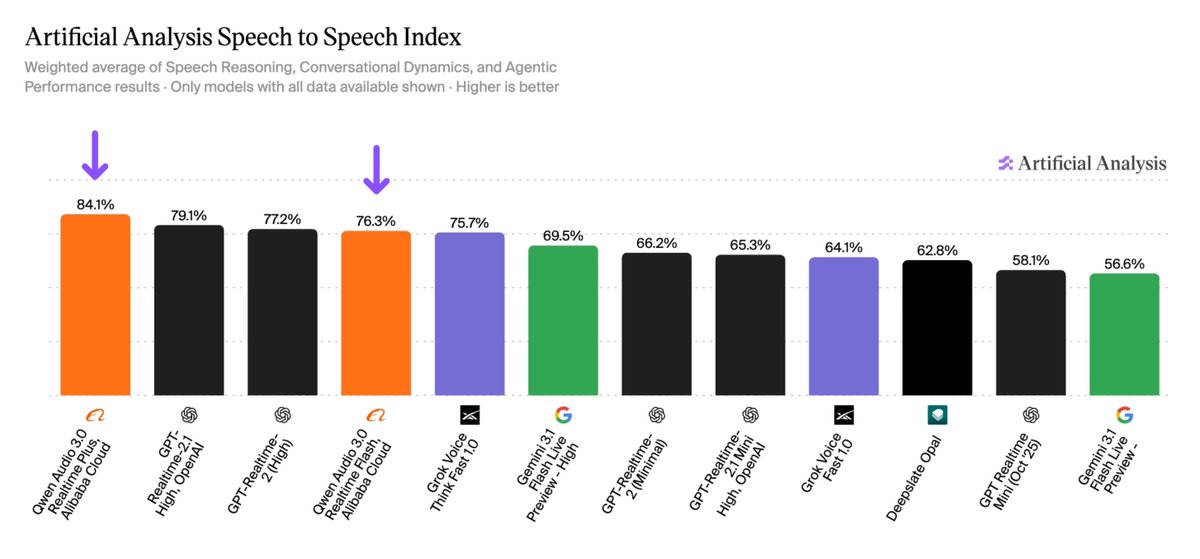
阿里发布了Qwen Audio 3.0 Realtime,这是一款原生语音到语音模型,提供Plus和Flash两个版本。Plus版本在Artificial Analysis语音到语音指数上以84.1%的得分创下新纪录,超越了GPT-Realtime-2.1 High(79.1%)和GPT-Realtime-2 High(77.2%)。它在三个子基准测试中均处于领先地位:Big Bench Audio(99.2%)、Full Duplex Bench(98.4%)和Tau Voice(54.6%)。 这一发布标志着实时语音AI的重大进步,阿里的模型性能超越了OpenAI的GPT-Realtime等西方领先模型。它展示了中国在多模态AI领域日益增强的竞争力,并可能加速语音到语音系统在虚拟助手、客户服务和实时翻译等应用中的采用。在智能体和对话基准上的强劲表现,表明其在复杂交互场景中具有实际效用。 Plus版本在Big Bench Audio上得分为99.2%,Full Duplex Bench为98.4%,Tau Voice为54.6%。但其首音频时间(Time to First Audio)为4.02秒,远慢于GPT-Realtime-2 Minimal的1.10秒。定价为每小时输入音频4.42美元,比GPT-Realtime-2 High(4.14美元)略贵,但比GPT-Realtime-2.1 High(10.75美元)便宜得多。Flash版本尽管标价较低,但由于回复更冗长,平均成本为每小时4.77美元。

@ArtificialAnlys@Alibaba_Qwen 转推1 张图片Alibaba has released Qwen Audio 3.0 Realtime, with the Plus variant debuting as the new #1 model on the Artificial Analysis Speech to Speech Index at 84.1%, ahead of GPT-Realtime-2.1 High at 79.1% Released earlier this month, Qwen Audio 3.0 Realtime is @Alibaba_Qwen’s flagship native Speech to Speech model, available in two variants: Plus and Flash. Qwen Audio 3.0 Realtime Plus leads on all three component benchmarks comprising the Artificial Analysis Speech to Speech Index, Big Bench Audio for Speech Reasoning, Full Duplex Bench for Conversational Dynamics, and Tau Voice for Agentic Performance. We tested the China-hosted endpoints on Aliyun (Alibaba Cloud). Key takeaways: ➤ Speech to Speech Index: Qwen Audio 3.0 Realtime Plus is the new leader at 84.1%, ahead of GPT-Realtime-2.1 High (79.1%) and GPT-Realtime-2 High (77.2%). The Flash variant comes in at 4th at 76.3%. ➤ Speech to Speech Index by Benchmark: On Big Bench Audio, the Plus variant achieves 99.2%, up ~0.5 percentage points from the previous best of 98.7% (Alibaba Qwen3.5 Omni Plus Realtime), with Flash variant scoring 96.1%. On Tau Voice, the Plus variant currently leads with a score of 54.6%, ahead of Grok Voice Think Fast 1.0 at 52.1%. On Full Duplex Bench, the Plus variant leads our Full Duplex Bench subset at 98.4%, with Flash at 96.9%, both ahead of the best non-Alibaba model, GPT-Realtime-2 (Minimal) at 96.1%. ➤ Speed: The Plus variant records an average Time to First Audio of 4.02 seconds on Big Bench Audio, with Flash at 4.16 seconds, among the slowest models on our leaderboard, and well behind GPT-Realtime-2 (Minimal) at 1.10 seconds and GPT-Realtime-2 (High) at 1.14 seconds ➤ Price: Plus costs $4.42 per hour of input audio on our Big Bench Audio subset, more expensive than GPT-Realtime-2 High ($4.14) and ~2.4x cheaper than GPT-Realtime-2.1 High ($10.75). The average cost for Flash variant is $4.77, higher than the Plus variant despite lower list prices, driven by comparatively more verbose responses. See below for more detail ⬇️原推文媒体预览展开原推文收起原推文

@Alibaba_Qwen 转推了

@ArtificialAnlys

Alibaba has released Qwen Audio 3.0 Realtime, with the Plus variant debuting as the new #1 model on the Artificial Analysis Speech to Speech Index at 84.1%, ahead of GPT-Realtime-2.1 High at 79.1% Released earlier this month, Qwen Audio 3.0 Realtime is @Alibaba_Qwen’s flagship native Speech to Speech model, available in two variants: Plus and Flash. Qwen Audio 3.0 Realtime Plus leads on all three component benchmarks comprising the Artificial Analysis Speech to Speech Index, Big Bench Audio for Speech Reasoning, Full Duplex Bench for Conversational Dynamics, and Tau Voice for Agentic Performance. We tested the China-hosted endpoints on Aliyun (Alibaba Cloud). Key takeaways: ➤ Speech to Speech Index: Qwen Audio 3.0 Realtime Plus is the new leader at 84.1%, ahead of GPT-Realtime-2.1 High (79.1%) and GPT-Realtime-2 High (77.2%). The Flash variant comes in at 4th at 76.3%. ➤ Speech to Speech Index by Benchmark: On Big Bench Audio, the Plus variant achieves 99.2%, up ~0.5 percentage points from the previous best of 98.7% (Alibaba Qwen3.5 Omni Plus Realtime), with Flash variant scoring 96.1%. On Tau Voice, the Plus variant currently leads with a score of 54.6%, ahead of Grok Voice Think Fast 1.0 at 52.1%. On Full Duplex Bench, the Plus variant leads our Full Duplex Bench subset at 98.4%, with Flash at 96.9%, both ahead of the best non-Alibaba model, GPT-Realtime-2 (Minimal) at 96.1%. ➤ Speed: The Plus variant records an average Time to First Audio of 4.02 seconds on Big Bench Audio, with Flash at 4.16 seconds, among the slowest models on our leaderboard, and well behind GPT-Realtime-2 (Minimal) at 1.10 seconds and GPT-Realtime-2 (High) at 1.14 seconds ➤ Price: Plus costs $4.42 per hour of input audio on our Big Bench Audio subset, more expensive than GPT-Realtime-2 High ($4.14) and ~2.4x cheaper than GPT-Realtime-2.1 High ($10.75). The average cost for Flash variant is $4.77, higher than the Plus variant despite lower list prices, driven by comparatively more verbose responses. See below for more detail ⬇️

背景
Artificial Analysis语音到语音指数是一个综合指标,从三个维度评估原生语音到语音模型:Big Bench Audio(语音推理)、Full Duplex Bench(对话动态)和Tau Voice(智能体性能)。Qwen Audio 3.0 Realtime是阿里Qwen系列的最新模型,专为实时语音交互设计,具备复杂推理和工具集成能力。测试通过阿里云的中国托管端点进行。

7月29日 02:56在 X 打开#Alibaba #Qwen Audio #speech-to-speech #AI model #benchmark

068.0

Code Arena 推出全栈基准测试,Kimi K3 领先

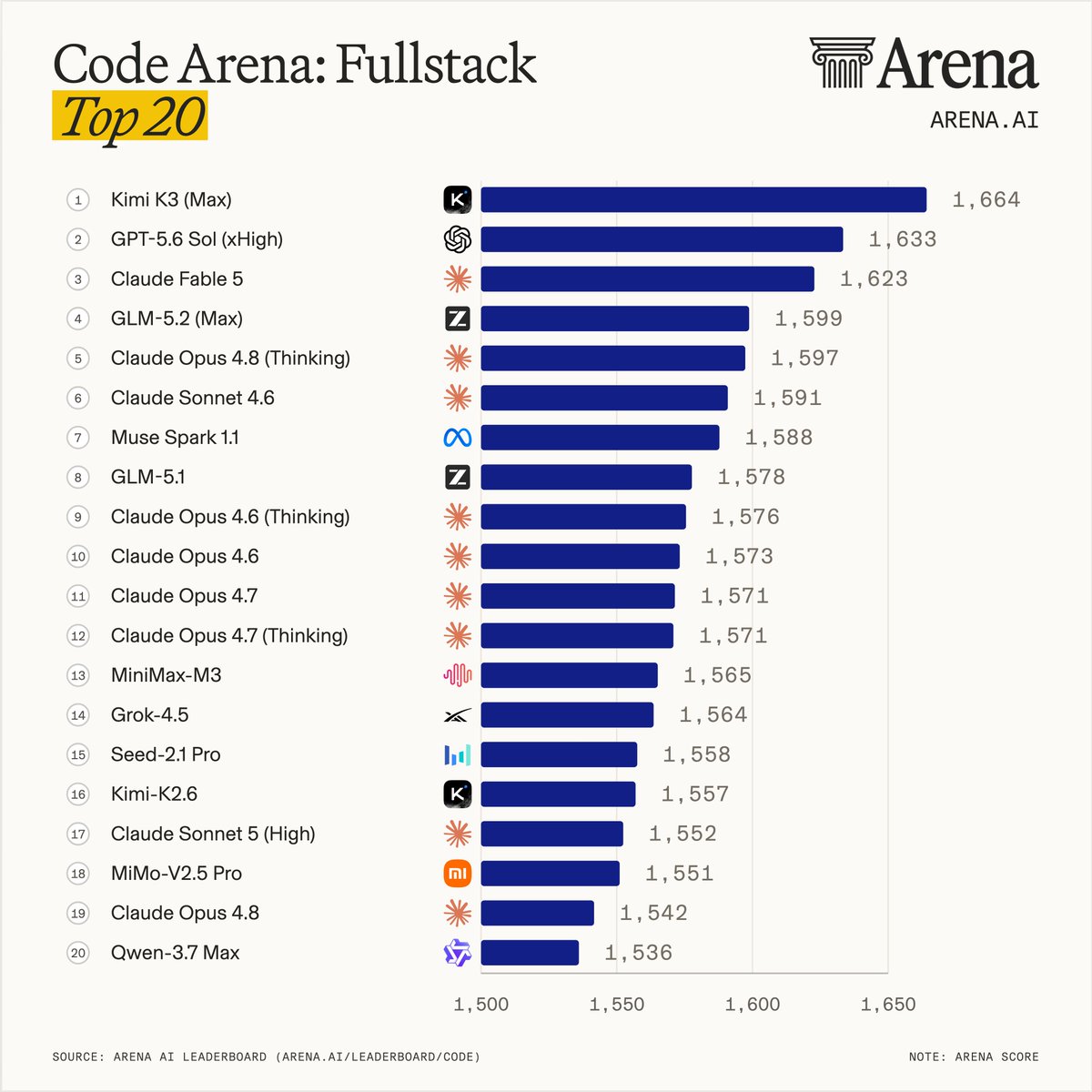
Code Arena 扩展了评估范围,纳入全栈 Web 开发任务,不再局限于前端原型。新基准测试考察 AI 模型的多步推理、工具使用以及涉及数据库和 API 的端到端应用生成能力。Kimi K3 (Max) 排名第一,GPT 5.6 Sol (xHigh) 和 Claude Fable 5 紧随其后。 该基准测试标志着评估 AI 编码智能体的方式从孤立代码片段转向真实世界的生产级任务。它凸显了 Kimi K3 等模型在自主全栈开发方面的进步,这可能会加速软件工程流程。结果可能影响企业采用并加剧 AI 实验室之间的竞争。 Fullstack Code Arena 要求模型构建包含持久数据库、API 密钥和快速部署的应用。模型作为智能体,使用结构化工具调用实时规划和优化。排行榜可在 arena.ai 查看,分数范围从 1386 到 1665。Kimi K3 是月之暗面推出的 2.8 万亿参数模型,承诺于 2026 年 7 月 27 日开放权重。

@arena@Kimi_Moonshot 转推1 张图片 · 1 个视频Code Arena now measures fullstack capabilities! View overall rankings across AI models on full-stack web development tasks: multi-step reasoning, tool use, and end-to-end app generation. - Kimi K3 (Max) takes #1 - GPT 5.6 Sol (xHigh) at #2 - Claude Fable 5 at #3 See more scores at: http://arena.ai/leaderboard/code/webdev/fullstack原推文媒体预览+1展开原推文收起原推文

@Kimi_Moonshot 转推了

@arena

Code Arena now measures fullstack capabilities! View overall rankings across AI models on full-stack web development tasks: multi-step reasoning, tool use, and end-to-end app generation. - Kimi K3 (Max) takes #1 - GPT 5.6 Sol (xHigh) at #2 - Claude Fable 5 at #3 See more scores at: http://arena.ai/leaderboard/code/webdev/fullstack

@arena

Code Arena just leveled up with fullstack capabilities 🚀 Introducing the new Fullstack Code Arena. We’re moving beyond frontend prototypes to fullstack development complete with databases, API keys, and fast deployments. Build, iterate, and ship real-world software — all in one place. Models now act as agents in the Code Arena, using structured tool calls to plan, execute, and refine in real time with real world tasks. Read more about it in the thread 🧵

背景
Code Arena 是一个通过真实任务评估 AI 编码模型的平台,采用人类偏好对齐和基于裁判的评估方式。全栈开发涉及前端(用户界面)和后端(服务器、数据库)工作,需要集成多种技术。Kimi K3 是中国 AI 公司月之暗面的最新旗舰模型,以其大上下文窗口和混合注意力机制闻名。GPT 5.6 Sol 是 OpenAI GPT 系列的变体,Claude Fable 5 来自 Anthropic。这些基准测试有助于比较不同大语言模型的实际编码能力。

7月29日 06:03在 X 打开#AI #benchmark #fullstack #coding #LLM

078.0

在 AGENTS/CLAUDE MD 中添加 git 提交规则以优化 AI 工作流

一位开发者分享了一个实用的 AI 编程代理提示词补充:在 AGENTS.md 或 CLAUDE.md 中插入一条规则,要求每个涉及文件修改的任务在结束前必须进行一次专注的 git 提交。该规则指示代理检查 git 状态、审查差异、仅暂存相关更改,并在 main 分支上使用简洁的提交信息进行提交,不推送或改写历史。这种方法取代了自动化钩子,让代理自行决定何时需要提交。 这个技巧解决了 AI 辅助开发中常见的问题:代理经常留下大量未提交的更改,导致难以追踪修改。通过强制规范的提交,团队可以保持清晰的 git 历史,降低丢失工作的风险,并改善协作。它使开发者能够在不牺牲版本控制最佳实践的情况下集成 AI 工具。 该规则具体包括:编辑前检查 git 状态,将已有更改视为用户所有;提交前审查最终差异并运行验证;仅暂存与当前任务相关的文件或代码块;在 main 分支上使用简洁的描述性提交信息,报告提交哈希,除非要求否则不推送、修改或改写历史;只读任务不创建空提交。作者指出他们不再使用钩子,因为钩子会在每个任务结束时触发,而此规则让代理仅在相关时提交。

@dotey串推 2 条2 段在 AGENTS/CLAUDE MD 里面加一句: Every implementation task that changes files MUST end with a git commit before the final response. - Inspect `git status` before editing and treat pre-existing or concurrent changes as user-owned. - Review the final diff and run proportionate verification before committing. - Stage only files or hunks that belong to the current task. Never bundle unrelated changes unless the user explicitly asks. - Use a concise descriptive commit message on `main`, report the commit hash, and do not push, amend, or rewrite history unless asked. - Read-only tasks and tasks with no file changes do not create empty commits. > 引用 @xiangyuli: 我一定要教会我们团队的人怎么用git > > 现在ai改了一堆代码, > 然后一个项目里完全没有提交过任何git状态 > 他妈的改天改到大动脉,自己都不知道改了啥展开原推文收起原推文

@dotey串推 2 条

在 AGENTS/CLAUDE MD 里面加一句: Every implementation task that changes files MUST end with a git commit before the final response. - Inspect `git status` before editing and treat pre-existing or concurrent changes as user-owned. - Review the final diff and run proportionate verification before committing. - Stage only files or hunks that belong to the current task. Never bundle unrelated changes unless the user explicitly asks. - Use a concise descriptive commit message on `main`, report the commit hash, and do not push, amend, or rewrite history unless asked. - Read-only tasks and tasks with no file changes do not create empty commits. > 引用 @xiangyuli: 我一定要教会我们团队的人怎么用git > > 现在ai改了一堆代码, > 然后一个项目里完全没有提交过任何git状态 > 他妈的改天改到大动脉,自己都不知道改了啥

@xiangyuli

我一定要教会我们团队的人怎么用git 现在ai改了一堆代码, 然后一个项目里完全没有提交过任何git状态 他妈的改天改到大动脉,自己都不知道改了啥

之所以我现在不用 Hook(我用过一段时间),是因为hook是在任何任务结束都会触发,但是大多数时候你不需要去 commit,不如让 Agent 自己去决定是不是要 commit,而且只 commit 相关的

背景
AGENTS.md 和 CLAUDE.md 是 AI 编程工具(如 Claude Code)使用的配置文件,用于提供项目特定的指令。它们可以包含 AI 代理在开发过程中遵循的规则、约定和工作流。Git 钩子是在 git 事件上自动运行的脚本,但缺乏上下文感知能力。引用的推文突出了一个团队在 AI 生成代码未提交方面的困扰,这可能导致混乱和更改丢失。
社区讨论
社区反应积极,许多人认为 AI 代理经常忽视 git 规范。一些用户分享了关于未提交更改堆积的类似困扰。其他人讨论了钩子等替代方法,但作者更倾向于让代理决定提交的理由引起了共鸣。

7月29日 16:37在 X 打开#AI-assisted development #git workflow #prompt engineering #software engineering

088.0

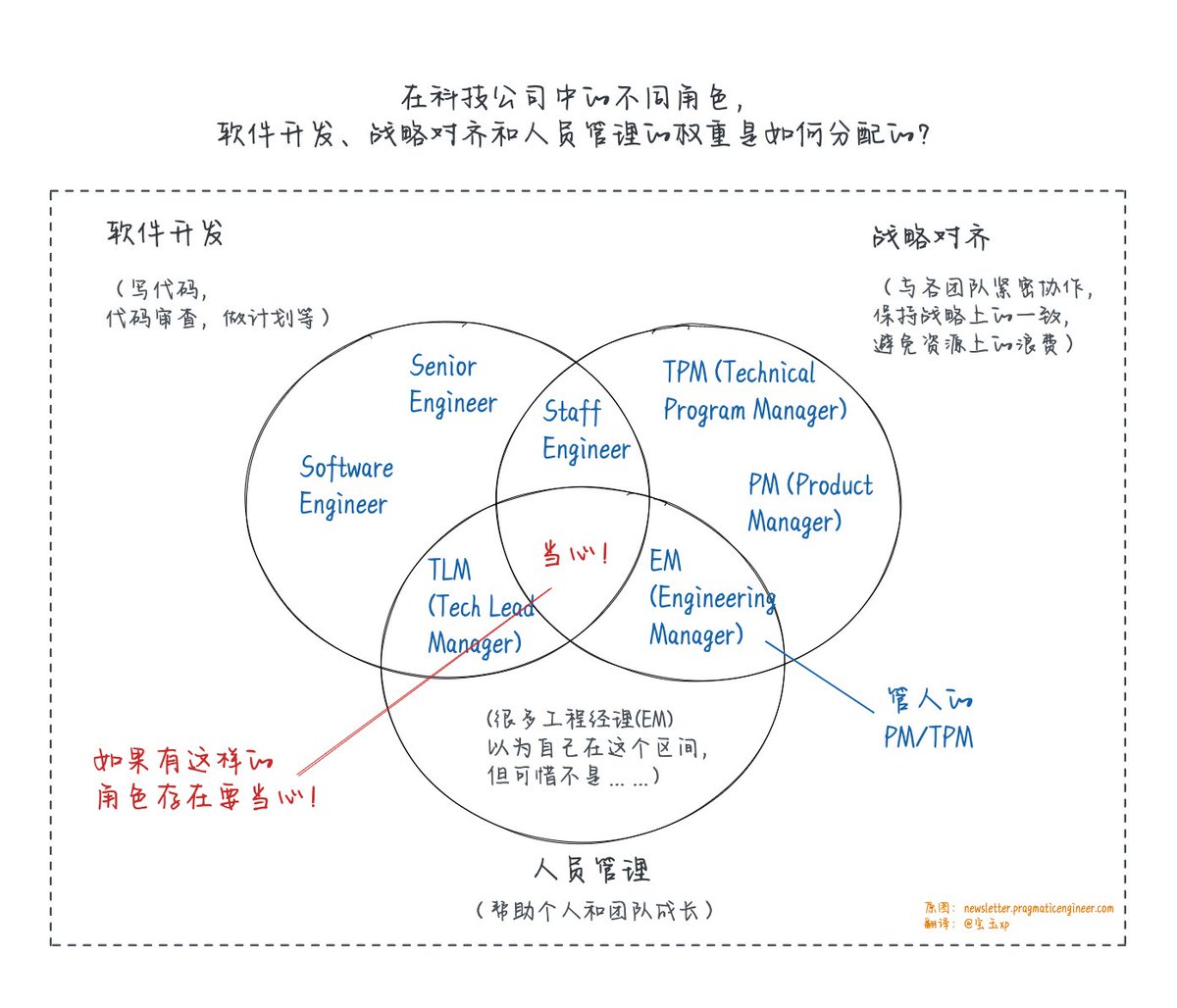
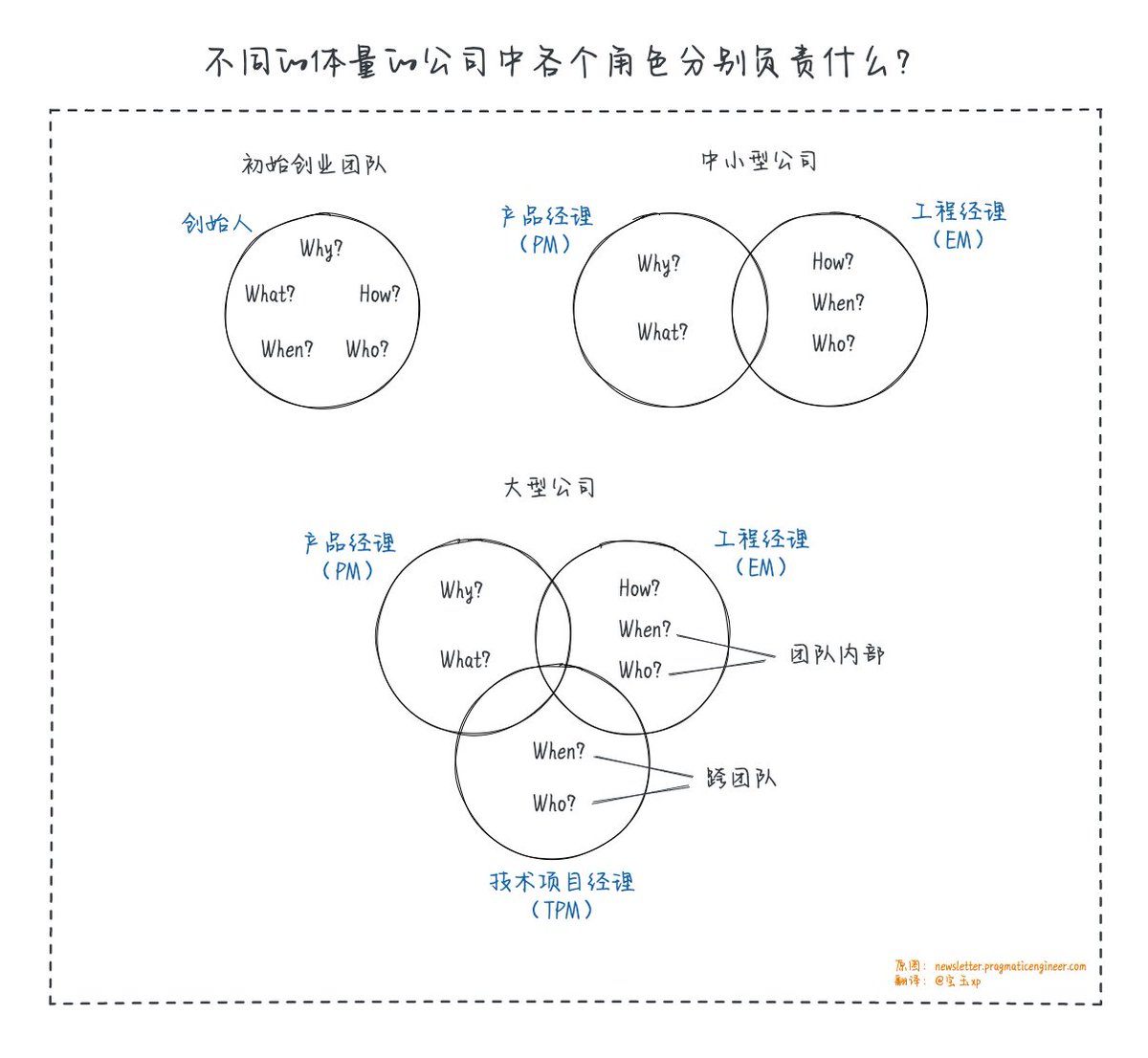
开发者借助编程智能体从技术主管转型工程经理,生产力大增

一位开发者报告了2025年工作流程的重大变化:在使用编程智能体时,从亲力亲为的技术主管(TL)角色转变为工程经理(EM)角色。这一转变的契机是‘Fable 5’前后AI代码质量的提升,现在开发者专注于定义项目目标和验收结果,而智能体自主编写代码、测试和修复缺陷。这种方法使得BaoCut应用能够实现每日小版本迭代。 这一转变展示了AI编程智能体如何从根本上改变软件开发角色,使开发者能够在更高抽象层次上工作并显著提高产出。它表明团队可以克服个人技能限制,因为智能体可以处理不熟悉的技术栈,从而做出更优的技术选择。这种模式可能成为未来AI增强型工程团队的蓝图。 该开发者此前像技术主管一样深度参与系统设计和代码审查,但成为瓶颈。在观察到AI生成代码可靠后,他们现在与智能体共同设计技术方案,然后使用‘/goal’命令让智能体执行,仅验证最终功能。对于缺陷,他们描述问题并让智能体重现、修复并补充测试覆盖。这也使他们摆脱了个人技术偏见:为了性能从Electron转向Swift+AppKit,后来尽管没有Rust经验,仍选择Rust进行跨平台开发,并毫无语言障碍地完成了第一个版本。

@dotey引用推文2 张图片今年以来,我在使用 Coding Agent 方面有一个很大的变化,就是从 TL(Teach Lead) 的角色变成了 EM(Engineering Manager) 的角色。 这两个角色主要差别在技术参与深度多少。 之前我更像一个 TL,虽然不是说事必躬亲,但是系统设计、代码审查什么的肯定是少不了的,说到底还是对 AI 写的代码不放心。 这样虽然质量更有保障,但是人会成为 Agent 的瓶颈,很多事情需要人去决策,细节需要人去掌握。 转折点在 Fable 5 前后,我发现 AI 写的代码质量已经相当可以了,只要稍加验证就不会有太大偏离,所以我越来越少的去干预 AI 写代码,而是会更站在全局去看一个项目: 决定项目怎么做,去验收好结果。 这极大的释放了 Agent 的生产力,大部分时候我想好要做什么功能,先和 Agent 一起做一个技术方案,然后确认方案没问题后,用 /goal 加上方案,让 Agent 去执行,写代码和自动化测试,等做好再去验收下功能,代码不怎么细看。 有 Bug 了就是把 Bug 描述给 Agent 让它自己去重现解决,并且让 Agent 补上相关测试覆盖,修复了后人再去验证一下。 这样还有一个好处,就是在技术选型时,不会局限于你自己的喜好和擅长。 当你是 TL 的角色是,还是会有点过度关注技术实现,包括技术选型会偏向你自己熟悉的喜欢的,而不一定是最适合的。 当你是 EM 的角色做技术选型,就不再关注自己擅长什么,而是什么技术最适合项目。 我因为前端熟悉,所以最开始开发字幕翻译 App 时,就优先考虑 Electron 这样的技术栈,因为自己熟悉,有问题能解决也能写的出来。 后来发现 Electron 性能很难满意,就换成了 Swift + AppKit 原生技术栈,本来我 Swift 是不熟悉的,但有 AI 辅助,整个过程毫无压力。 现在在设计 BaoCut 下一个大版本的时候,要考虑跨平台方案,首选是 Rust,哪怕我从来没写过一行 Rust 代码,但我知道这是一个很好的跨平台选择。 目前基于 Rust 的第一个版本已经写完了,整个过程几乎没有任何语言上的障碍。 通过这样的模式我在开发 BaoCut 的时候,基本上可以每天一个小版本迭代。https://baocut.app/releases/ 这两天速度慢下来了,是因为需要构思新的大版本,这时候人就又成了瓶颈了:如果人没想清楚该做什么,Agent 再厉害也帮不上。原推文媒体预览+1展开原推文收起原推文

@dotey

今年以来,我在使用 Coding Agent 方面有一个很大的变化,就是从 TL(Teach Lead) 的角色变成了 EM(Engineering Manager) 的角色。 这两个角色主要差别在技术参与深度多少。 之前我更像一个 TL,虽然不是说事必躬亲,但是系统设计、代码审查什么的肯定是少不了的,说到底还是对 AI 写的代码不放心。 这样虽然质量更有保障,但是人会成为 Agent 的瓶颈,很多事情需要人去决策,细节需要人去掌握。 转折点在 Fable 5 前后,我发现 AI 写的代码质量已经相当可以了,只要稍加验证就不会有太大偏离,所以我越来越少的去干预 AI 写代码,而是会更站在全局去看一个项目: 决定项目怎么做,去验收好结果。 这极大的释放了 Agent 的生产力,大部分时候我想好要做什么功能,先和 Agent 一起做一个技术方案,然后确认方案没问题后,用 /goal 加上方案,让 Agent 去执行,写代码和自动化测试,等做好再去验收下功能,代码不怎么细看。 有 Bug 了就是把 Bug 描述给 Agent 让它自己去重现解决,并且让 Agent 补上相关测试覆盖,修复了后人再去验证一下。 这样还有一个好处,就是在技术选型时,不会局限于你自己的喜好和擅长。 当你是 TL 的角色是,还是会有点过度关注技术实现,包括技术选型会偏向你自己熟悉的喜欢的,而不一定是最适合的。 当你是 EM 的角色做技术选型,就不再关注自己擅长什么,而是什么技术最适合项目。 我因为前端熟悉,所以最开始开发字幕翻译 App 时,就优先考虑 Electron 这样的技术栈,因为自己熟悉,有问题能解决也能写的出来。 后来发现 Electron 性能很难满意,就换成了 Swift + AppKit 原生技术栈,本来我 Swift 是不熟悉的,但有 AI 辅助,整个过程毫无压力。 现在在设计 BaoCut 下一个大版本的时候,要考虑跨平台方案,首选是 Rust,哪怕我从来没写过一行 Rust 代码,但我知道这是一个很好的跨平台选择。 目前基于 Rust 的第一个版本已经写完了,整个过程几乎没有任何语言上的障碍。 通过这样的模式我在开发 BaoCut 的时候,基本上可以每天一个小版本迭代。https://baocut.app/releases/ 这两天速度慢下来了,是因为需要构思新的大版本,这时候人就又成了瓶颈了:如果人没想清楚该做什么,Agent 再厉害也帮不上。

@dotey

通常北美的工程技术相关的职业分成以下五个类别: 开发工程师 SE / SDE(Software Engineer / Software Development Engineer) 工程经理 EM / SDM(Engineering Manager / Software Development Manager) 技术主管 TL / TLM (Tech Lead / Tech Lead Manager) 技术项目经理 TPM (Technical Program Manager) 产品经理 PM (Product Manager) https://baoyu.io/blog/engineering-management/engineering-roles

背景
在软件工程中,技术主管(TL)是指导技术决策并经常编写代码的高级开发者,而工程经理(EM)则专注于人员、流程和项目交付,较少亲自编码。编程智能体是能够跨多个文件自主编写、修改和调试代码的AI工具。开发者提到的‘Fable 5’可能是他们使用的AI模型或智能体的内部版本。BaoCut是一款macOS应用,用于字幕转录、翻译和视频剪辑,由作者开发。

7月29日 20:03在 X 打开#AI-assisted coding #software engineering #productivity #tech stack #agent workflow

098.0

OpenAI 为学术研究人员推出免费前沿模型访问计划

OpenAI 宣布了一项新计划,为科学家、数学家和工程师免费提供其前沿 AI 模型,包括 GPT-5.6 系列。该计划从 10,000 名研究人员开始,到 2027 年将扩展至 100,000 人,并提供企业级隐私保护和实践支持。此举旨在普及 AI 使用,加速跨学科的科学发现。 该计划解决了先进 AI 能力集中在资金雄厚的实验室和公司的问题,有望为学术研究创造公平的竞争环境。通过让研究人员直接使用 GPT-5.6 等最先进的模型,它可能加速从医学到气候科学等领域的突破。同时,它也为负责任的 AI 部署树立了隐私保护先例,影响其他 AI 开发者与研究社区的互动方式。 该计划提供 GPT-5.6 系列的访问权限,包括能力递增的 Luna、Terra 和 Sol 变体。每个工作区都具备企业级隐私和安全性,默认情况下不会使用研究人员的数据进行模型训练。参与者最多可邀请四名合作者,计划还包括培训和同行学习机会。推广从 10,000 名研究人员开始,目标到 2027 年达到 100,000 人。

@OpenAI串推 2 条2 段We believe the benefits of frontier AI should not be concentrated in a few companies and well-resourced labs. Researchers know their fields best. Our role is to put powerful tools in their hands and help accelerate their work. The program will help researchers take on the hardest problems, accelerate discovery, and improve productivity across their work, from preparing grant applications to testing hypotheses.展开原推文收起原推文

@OpenAI串推 2 条

We believe the benefits of frontier AI should not be concentrated in a few companies and well-resourced labs. Researchers know their fields best. Our role is to put powerful tools in their hands and help accelerate their work. The program will help researchers take on the hardest problems, accelerate discovery, and improve productivity across their work, from preparing grant applications to testing hypotheses.

Participants will receive access to our frontier models, including our GPT-5.6 family of models. Each workspace includes business-grade privacy and security protections. Researcher data is not used to train our models by default, and participants can invite up to four collaborators. The program also includes training, hands-on support, and opportunities to learn from other researchers. https://openai.com/index/chatgpt-for-academic-researchers/

背景
前沿 AI 模型是最先进的 AI 系统,通常是经过海量数据训练的大型语言模型,能够执行最前沿的任务。GPT-5.6 是 OpenAI 于 2026 年 7 月发布的此类模型系列,分为 Luna、Terra 和 Sol 三个层级。学术研究人员通常缺乏资源来使用这些开发成本高达数百万美元的强大工具。OpenAI 的计划旨在通过提供免费且带隐私保护的访问来弥合这一差距,使研究人员能够利用 AI 解决复杂的科学问题。
社区讨论
社区反应热烈,一条引人注目的评论仅用“Yeah! Science!”表达了对加速研究潜力的兴奋。人们普遍支持 AI 访问的民主化,但也有人可能质疑依赖单一公司模型的长期可持续性和潜在偏见。

7月29日 17:19在 X 打开#OpenAI #AI for Science #Academic Research #GPT-5.6 #AI Accessibility

108.0

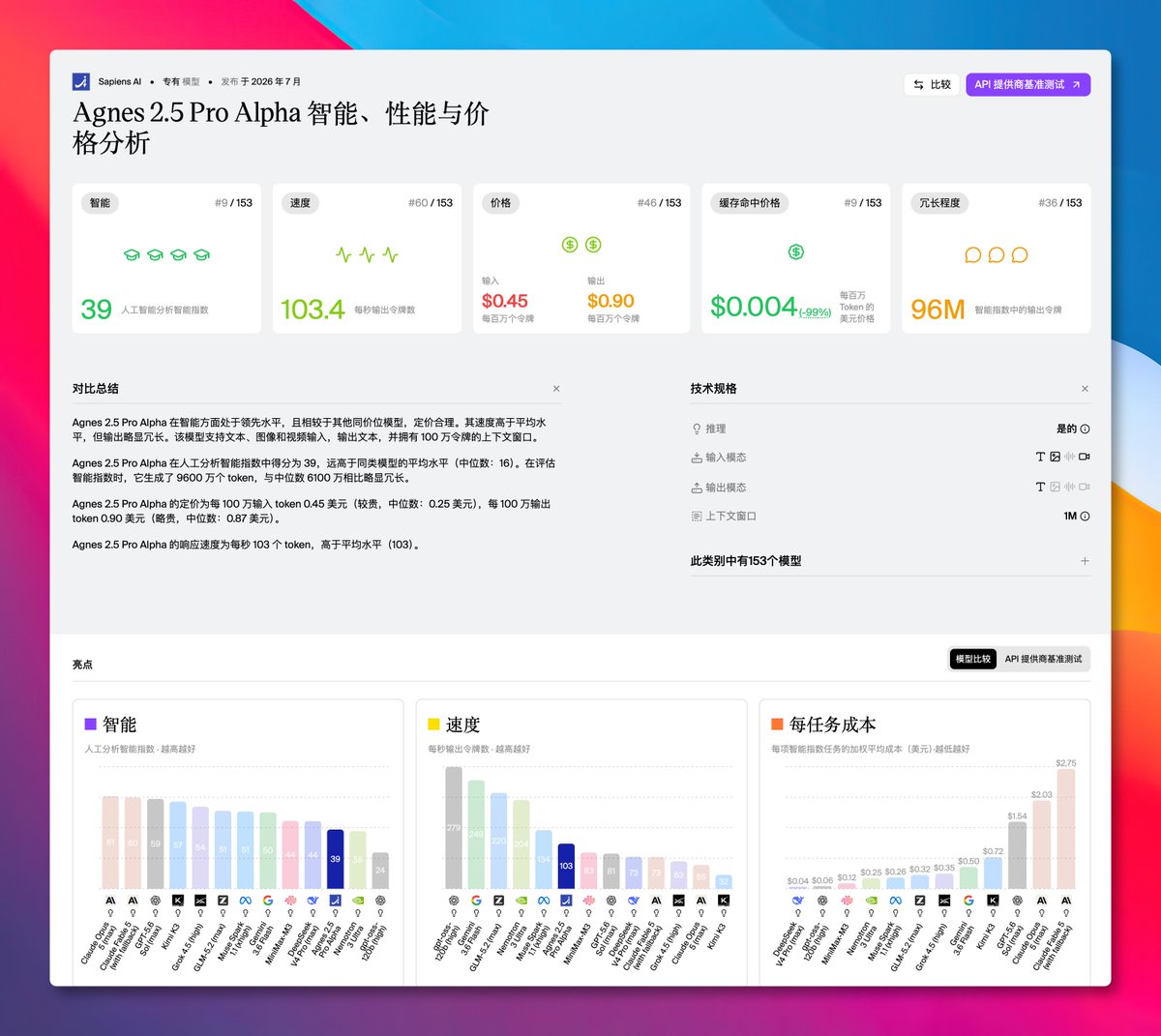
Agnes AI 发布 Agnes 2.5 Pro Alpha,API 免费且支持百万级上下文窗口

Agnes AI 发布了新模型 Agnes 2.5 Pro Alpha,在复杂推理、专业开发和智能体任务方面有显著提升。该模型支持 100 万 token 的超长上下文窗口,能够处理大型项目和长文档。基础模型也已迭代至 Agnes-2.5-Flash,所有 API(包括文本、图像和视频)依然无限期免费。 免费 API 降低了开发者和研究人员的门槛,使他们能够无成本顾虑地进行实验和部署。百万级上下文窗口能够更连贯、全面地处理大规模数据,这对于代码库分析和长文本生成等高级应用至关重要。此举加剧了 AI API 市场的竞争,可能迫使其他提供商提供更慷慨的免费额度。 Agnes 2.5 Pro Alpha 目前已在 Artificial Analysis 基准测试排行榜上列出。该模型支持文本、图像和视频等多模态输入。基础模型 Agnes-2.5-Flash 足以应对日常开发任务。所有模型均可通过官网 agnes-ai.com 访问。

@GitHub_Daily原推文1 张图片上个月,那个把文本、图像、视频全模态模型 API 无限期免费开放的 Agnes AI。 一度爆火,至今都还有很多人在白嫖。 今天在 Artificial Analysis 榜单上,看到了它家有个新模型 Agnes 2.5 Pro Alpha 在打榜。 了解了下这次 2.5 Pro Alpha 模型,在复杂推理、专业开发和 Agent 任务等方面,都有不少提升。 同时也支持到 1M 超长上下文窗口,对于开发大型项目、处理长文档等场景来说超有用。 另外我发现它的基础模型已迭代到 Agnes-2.5-Flash,依然还是不限期免费。 开发者可以通过API直接调用,文本之外,Agnes的图像和视频模型也依然免费开放。 拿Agnes-2.5-Flash处理一些日常开发任务已经够用了,感兴趣的朋友可以通过新官网查看模型和调用方式。 官网:https://agnes-ai.com原推文媒体预览展开原推文收起原推文

@GitHub_Daily

上个月,那个把文本、图像、视频全模态模型 API 无限期免费开放的 Agnes AI。 一度爆火,至今都还有很多人在白嫖。 今天在 Artificial Analysis 榜单上,看到了它家有个新模型 Agnes 2.5 Pro Alpha 在打榜。 了解了下这次 2.5 Pro Alpha 模型,在复杂推理、专业开发和 Agent 任务等方面,都有不少提升。 同时也支持到 1M 超长上下文窗口,对于开发大型项目、处理长文档等场景来说超有用。 另外我发现它的基础模型已迭代到 Agnes-2.5-Flash,依然还是不限期免费。 开发者可以通过API直接调用,文本之外,Agnes的图像和视频模型也依然免费开放。 拿Agnes-2.5-Flash处理一些日常开发任务已经够用了,感兴趣的朋友可以通过新官网查看模型和调用方式。 官网:https://agnes-ai.com

背景
Agnes AI 是一个提供免费全模态 AI API 的平台,涵盖文本、图像和视频处理模型。上下文窗口指模型一次能处理的文本量(以 token 计),100 万 token 的窗口允许单次处理极长的文档或代码库。Artificial Analysis 是一个独立基准测试网站,从质量、速度和价格方面比较 AI 模型。免费 API 意味着开发者无需预付费用即可集成这些模型,但可能存在速率限制。

7月29日 10:00在 X 打开#AI #LLM #API #free #Agnes

118.0

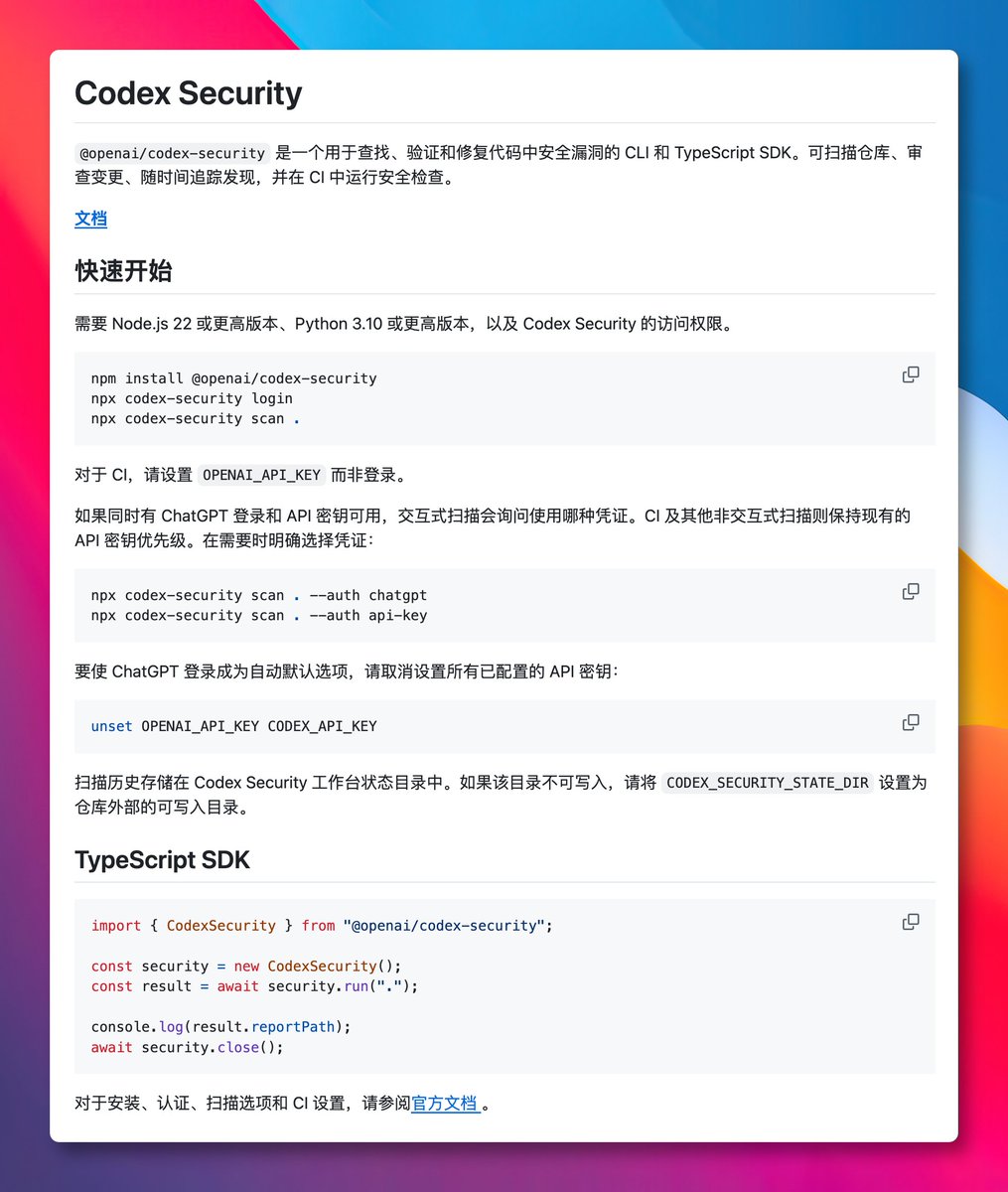
OpenAI 开源 Codex Security CLI,实现自动化漏洞扫描

OpenAI 悄悄开源了 Codex Security,一个用于查找、验证和修复代码安全漏洞的命令行工具和 TypeScript SDK。它支持扫描整个仓库或特定更改,并可集成到 CI 流程中,在每次提交时自动运行安全检查。该工具还会持续跟踪发现的问题,清晰展示哪些已修复、哪些仍待处理。 该发布将先进的 AI 驱动安全分析直接融入开发者工作流,有望减少手动代码审查的时间和成本。通过开源,OpenAI 促进了广泛采用和社区贡献,可能提升整个行业的软件安全性。它将安全左移,在开发早期而非部署前发现漏洞。 该工具需要 ChatGPT 账号或 API 密钥进行认证,在自动化环境中 API 密钥优先。它复用现有的 Codex 凭据并存储在系统密钥环中。Codex Security 不仅能识别潜在漏洞,还会验证其真实性并提供修复建议。它可以扫描你拥有或有权限评估的仓库,并且发现的问题会持久化以便长期跟踪。

@GitHub_Daily原推文1 张图片OpenAI 悄悄开源一个专门查代码安全漏洞的命令行工具:Codex Security。 另外配了 TypeScript SDK,能直接扫描整个项目仓库,也能只审查某次的改动。 找出来的问题会持久长期记着,哪些修了、哪些还挂着,一目了然。 GitHub:http://github.com/openai/codex-security 除了找出漏洞,还会验证问题是不是真的存在,并给出对应的修复。 接到自动构建流程里,每次提交跑一遍安全检查,不用等上线前才临时补。 支持 ChatGPT 账号登录,也可以用 API Key,方便放在自动化环境里跑。原推文媒体预览展开原推文收起原推文

@GitHub_Daily

OpenAI 悄悄开源一个专门查代码安全漏洞的命令行工具:Codex Security。 另外配了 TypeScript SDK,能直接扫描整个项目仓库,也能只审查某次的改动。 找出来的问题会持久长期记着,哪些修了、哪些还挂着,一目了然。 GitHub:http://github.com/openai/codex-security 除了找出漏洞,还会验证问题是不是真的存在,并给出对应的修复。 接到自动构建流程里,每次提交跑一遍安全检查,不用等上线前才临时补。 支持 ChatGPT 账号登录,也可以用 API Key,方便放在自动化环境里跑。

背景
Codex Security 是 OpenAI 进军 AI 辅助软件开发的一部分,基于驱动 GitHub Copilot 的 Codex 模型。它满足了现代 DevOps 实践中对自动化安全的日益增长的需求,其中持续集成和交付要求快速、可靠的漏洞检测。传统的静态分析工具常产生误报,而基于 AI 的方法能更好地理解上下文并减少噪音。该工具的开源特性使组织能够检查并针对其特定环境进行定制。此次发布紧随 OpenAI 其他安全举措,如用于漏洞发现的 Daybreak AI 代理。

7月29日 04:00在 X 打开#security #open source #AI tools #DevOps #code analysis

128.0

OpenAI 重置 GPT-5.6 Sol 使用限制并提升效率

OpenAI 已为所有 ChatGPT Work 和 Codex 用户重置使用限制,并宣布通过优化使 GPT-5.6 Sol 的使用时长增加 18%。这些改进解决了 token 消耗过快的问题,尤其是对重度用户,并将在明天恢复五小时限制。 此次更新直接回应了用户关于 GPT-5.6 Sol 过快消耗 Codex 配额的投诉,改善了开发者和重度用户的体验。18% 的效率提升使高级 AI 编程更加易用和可持续,彰显了 OpenAI 在能力与成本效益之间取得平衡的承诺。 GPT-5.6 Sol 较高的 token 消耗源于其更频繁的工具调用、子代理协调以及代码模式下的并行操作。影响并不均衡:普通用户觉得效率尚可,但重度用户消耗极快。OpenAI 还改进了对网络搜索和工具调用等待期的处理。

@thsottiaux原推文Hello people of Sol! I've reset usage limits for all ChatGPT Work and Codex users. Together with that, a quick update on GPT-5.6 Sol usage limits. Over the past few weeks, many of you have told us that Sol was using your Codex limits faster than expected. To be clear, we have not reduced usage on any subscription plans. We’ve been digging into what was happening and have landed several improvements. As a result, we expect your usage to last around 18% longer during typical use of Sol. Some of you should already see significantly larger improvements from today. Tomorrow, we’ll also restore the five-hour limit that we temporarily paused while investigating. Here’s what we found: - GPT-5.6 Sol is much more willing to work for longer, make additional tool calls, and coordinate complex workflows across tools and subagents. That makes it better at solving hard problems, but some tasks were using far more than we intended. - Sol also works harder at the same reasoning effort than previous models. High on Sol can use more tokens than High did on GPT-5.5. - Programmatic tool calling, also referred to as code mode, gives Sol much more flexibility to run tool calls in parallel or continue working while waiting. But it also led to more responses per turn, more cached input tokens, and higher usage than expected. - This was particularly noticeable when Sol was waiting for tool calls to finish or running many web searches. We’ve improved how we handle both cases and are continuing to make code mode more efficient. - The impact was also very uneven. The median user actually found Sol quite token efficient, while some power users working on harder tasks saw their usage drain much faster. We were very focused on average and median usage before launch and missed some cases where the long tail could use significantly more usage. Sol is a significant step forward in what Codex can do, but capability and efficiency do not always improve at the same pace, and some issues only become clear once people are using the model at real-world scale. We should have recognized this sooner and been more upfront about it. You keep pushing the frontier and we’ll keep improving efficiency and sharing updates as we go.展开原推文收起原推文

@thsottiaux

Hello people of Sol! I've reset usage limits for all ChatGPT Work and Codex users. Together with that, a quick update on GPT-5.6 Sol usage limits. Over the past few weeks, many of you have told us that Sol was using your Codex limits faster than expected. To be clear, we have not reduced usage on any subscription plans. We’ve been digging into what was happening and have landed several improvements. As a result, we expect your usage to last around 18% longer during typical use of Sol. Some of you should already see significantly larger improvements from today. Tomorrow, we’ll also restore the five-hour limit that we temporarily paused while investigating. Here’s what we found: - GPT-5.6 Sol is much more willing to work for longer, make additional tool calls, and coordinate complex workflows across tools and subagents. That makes it better at solving hard problems, but some tasks were using far more than we intended. - Sol also works harder at the same reasoning effort than previous models. High on Sol can use more tokens than High did on GPT-5.5. - Programmatic tool calling, also referred to as code mode, gives Sol much more flexibility to run tool calls in parallel or continue working while waiting. But it also led to more responses per turn, more cached input tokens, and higher usage than expected. - This was particularly noticeable when Sol was waiting for tool calls to finish or running many web searches. We’ve improved how we handle both cases and are continuing to make code mode more efficient. - The impact was also very uneven. The median user actually found Sol quite token efficient, while some power users working on harder tasks saw their usage drain much faster. We were very focused on average and median usage before launch and missed some cases where the long tail could use significantly more usage. Sol is a significant step forward in what Codex can do, but capability and efficiency do not always improve at the same pace, and some issues only become clear once people are using the model at real-world scale. We should have recognized this sooner and been more upfront about it. You keep pushing the frontier and we’ll keep improving efficiency and sharing updates as we go.

背景
GPT-5.6 Sol 是 OpenAI 于 2026 年 7 月发布的 GPT-5.6 模型系列的一个变体,以高级编码和推理能力著称。Codex 是 OpenAI 的 AI 编程工具,其使用限制基于 token 和时间窗口。子代理是可自动生成的辅助程序,用于处理复杂任务,但会增加 token 消耗。

7月29日 04:09在 X 打开#OpenAI #ChatGPT #GPT-5.6 #usage limits #AI